“Through formally varied poems about the real-life featherweight boxer Bobby Chacon and his wife, Amezcua’s second collection probes notions of violence, sport, marriage and gender roles.” —The New York Times
“In Amezcua’s work every possible choice available to a poet has been made with intention and expert execution. . . . This level of attention to the physicality of poetry allows form and placement to become part of the language or perhaps a language of its own.” —Angie Dribben, The Los Angeles Review
“The division between the home and the ring dissolves as we embrace Chacon’s love of each round alongside Ginn’s pleas for him to leave boxing. . . . Formally agile poems appear alongside ones written in traditional forms like the sonnet and pantoum. But even as I arrive at forms I know, Amezcua still keeps me on my toes as she bends and breaks the rules to suit the book’s needs.” —Chet’la Sebree, Poetry Society of America
“The vibrant second collection from Amezcua explores the life of world-boxing champion Bobby Chacon and his wife, Valerie Ginn. . . . Using redaction, repetition, and a dizzying variety of concrete poems that are like a literary magic-eye, Amezcua reveals new implications beneath the haunting text.” —Publishers Weekly
“In these stunning poems, the ring is a space of corruption and redemption, brutality and tenderness, ambition and desperation. Eloisa Amezcua writes into the histories of the fighter Bobby Chacon and his wife, Valorie Ginn, with striking electricity and sensitivity, illuminating how the violent intertwining of two paths in the ring can have profound consequences for the lives lived outside it. Fighting Is Like a Wife is a tour de force, and Eloisa Amezcua is one of my favorite poets working today.” —Laura van den Berg
“Eloisa Amezcua’s gorgeous second collection, Fighting Is Like a Wife, immerses us in the myriad trepidations and violences that orbit the fight game. These brilliantly tactile, visceral poems excavate the relentless combinations of jabs and apologies that come from men who only know how to talk with their hands. It takes a poet of exceptional empathy and uncanny dexterity to turn the difficult lives of Valorie Ginn and Bobby Chacon into verse as Amezcua has done. Beyond the rough history here is the poet’s perfect ear: we can hear the gloves when they land, we can hear two people tearing apart like a contract that shouldn’t have been signed. The book’s title might be a quote from Chacon, but all the testimony inside is gifted to us by this marvelous poet.” —Adrian Matejka
Praise for From the Inside Quietly
“A complex examination of how we come to love and how we come to be, the poems in From the Inside Quietly create an intricate and urgent music of the border and the feminine body. With a voice that’s barbed at times but also full of empathy and grace, this is a powerful debut that will continue to rattle and quake in the mind.” —Ada Limón
“In From the Inside Quietly, Eloisa Amezcua writes, ‘in my own mind / I’m a mirror. / I see everything / except myself.’ This book holds reflection—both the noun and verb of it—at its core, from ‘the bottom of the pool / opal and shimmering’ to meditations on language, intimacy, and the self. These poems trouble themselves with what we know and what we don’t: what a daughter knows of her mother’s difficult childhood; what a psychiatrist knows of his patients that their own families don’t know; what we know of our lovers; and what we know of ourselves. Despite all the tricks of light and shadow a mirror can play, all the tricks of distance and shape and proportion, in this stunning collection we encounter a poet who sees, feels, and writes with aching clarity.” —Maggie Smith
“Eloisa Amezcua’s From the Inside Quietly is a formally inventive book of lyric love poetry. But it is also a book about how love is a naturally clandestine thing. All yearning begins in a din of silence: ‘Dragonflies hum over the lake / and the scalding dock / where you sit for hours, arms / tired from so much reaching.’ Amezcua is a poet who means to see what can’t be said. This is a beautiful debut.”—Jericho Brown
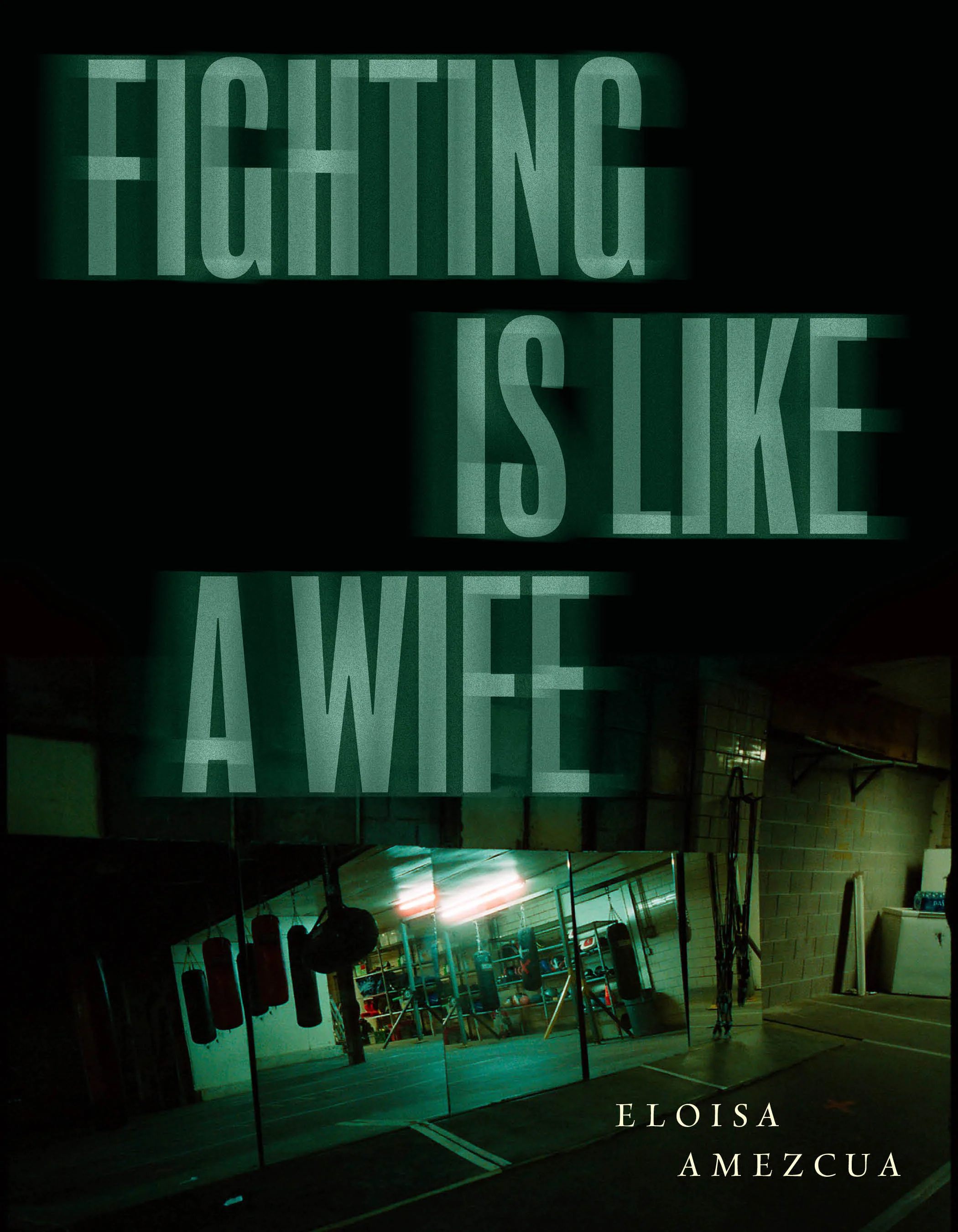
Fighting Is Like a Wife
Poetry by Eloisa Amezcua
April 12, 2022 • 7 x 9 • 88 pages • 978-1-56689-634-4
In Fighting Is Like a Wife, Eloisa Amezcua uses striking visual poems to reconstruct the love story—and the tragedy—of two-time world boxing champion “Schoolboy” Bobby Chacon and his first wife, Valorie Ginn.
Bobby took to fighting the way a surfer takes to water: the waves and crests, the highs and the pummeling lows. Valorie, as girlfriend, then wife, then mother of their children, was proud of Bobby and how he found a way out of the harsh world they were born into. But the brain-sloshing blows, the women, and the alcohol began to take their toll, and soon Bobby couldn’t hear her anymore. With her fate affixed to Bobby’s, and Bobby’s to the ring, Valorie sought her own way out of this dilemma.
Using haunting, visceral language to evoke the emotion of the fight, and incorporating direct quotations from sports commentators and Bobby himself, Fighting Is Like a Wife reveals how boxing, like love and poetry, can be brutal, vulnerable, and surprising.
About the Author
Eloisa Amezcua is from Arizona. She is the author of From the Inside Quietly (2018). A MacDowell fellow, Eloisa has published poems and translations in the New York Times Magazine, Poetry Magazine, Kenyon Review, Gulf Coast, the Academy of American Poets Poem-a-Day series, and elsewhere.
Praise for Fighting Is Like a Wife
“Through formally varied poems about the real-life featherweight boxer Bobby Chacon and his wife, Amezcua’s second collection probes notions of violence, sport, marriage and gender roles.” —The New York Times
“In Amezcua’s work every possible choice available to a poet has been made with intention and expert execution. . . . This level of attention to the physicality of poetry allows form and placement to become part of the language or perhaps a language of its own.” —Angie Dribben, The Los Angeles Review
“The division between the home and the ring dissolves as we embrace Chacon’s love of each round alongside Ginn’s pleas for him to leave boxing. . . . Formally agile poems appear alongside ones written in traditional forms like the sonnet and pantoum. But even as I arrive at forms I know, Amezcua still keeps me on my toes as she bends and breaks the rules to suit the book’s needs.” —Chet’la Sebree, Poetry Society of America
“The vibrant second collection from Amezcua explores the life of world-boxing champion Bobby Chacon and his wife, Valerie Ginn. . . . Using redaction, repetition, and a dizzying variety of concrete poems that are like a literary magic-eye, Amezcua reveals new implications beneath the haunting text.” —Publishers Weekly
“In these stunning poems, the ring is a space of corruption and redemption, brutality and tenderness, ambition and desperation. Eloisa Amezcua writes into the histories of the fighter Bobby Chacon and his wife, Valorie Ginn, with striking electricity and sensitivity, illuminating how the violent intertwining of two paths in the ring can have profound consequences for the lives lived outside it. Fighting Is Like a Wife is a tour de force, and Eloisa Amezcua is one of my favorite poets working today.” —Laura van den Berg
“Eloisa Amezcua’s gorgeous second collection, Fighting Is Like a Wife, immerses us in the myriad trepidations and violences that orbit the fight game. These brilliantly tactile, visceral poems excavate the relentless combinations of jabs and apologies that come from men who only know how to talk with their hands. It takes a poet of exceptional empathy and uncanny dexterity to turn the difficult lives of Valorie Ginn and Bobby Chacon into verse as Amezcua has done. Beyond the rough history here is the poet’s perfect ear: we can hear the gloves when they land, we can hear two people tearing apart like a contract that shouldn’t have been signed. The book’s title might be a quote from Chacon, but all the testimony inside is gifted to us by this marvelous poet.” —Adrian Matejka
Praise for From the Inside Quietly
“A complex examination of how we come to love and how we come to be, the poems in From the Inside Quietly create an intricate and urgent music of the border and the feminine body. With a voice that’s barbed at times but also full of empathy and grace, this is a powerful debut that will continue to rattle and quake in the mind.” —Ada Limón
“In From the Inside Quietly, Eloisa Amezcua writes, ‘in my own mind / I’m a mirror. / I see everything / except myself.’ This book holds reflection—both the noun and verb of it—at its core, from ‘the bottom of the pool / opal and shimmering’ to meditations on language, intimacy, and the self. These poems trouble themselves with what we know and what we don’t: what a daughter knows of her mother’s difficult childhood; what a psychiatrist knows of his patients that their own families don’t know; what we know of our lovers; and what we know of ourselves. Despite all the tricks of light and shadow a mirror can play, all the tricks of distance and shape and proportion, in this stunning collection we encounter a poet who sees, feels, and writes with aching clarity.” —Maggie Smith
“Eloisa Amezcua’s From the Inside Quietly is a formally inventive book of lyric love poetry. But it is also a book about how love is a naturally clandestine thing. All yearning begins in a din of silence: ‘Dragonflies hum over the lake / and the scalding dock / where you sit for hours, arms / tired from so much reaching.’ Amezcua is a poet who means to see what can’t be said. This is a beautiful debut.”—Jericho Brown
Poetry by Eloisa Amezcua
April 12, 2022 • 7 x 9 • 88 pages • 978-1-56689-634-4
In Fighting Is Like a Wife, Eloisa Amezcua uses striking visual poems to reconstruct the love story—and the tragedy—of two-time world boxing champion “Schoolboy” Bobby Chacon and his first wife, Valorie Ginn.
Bobby took to fighting the way a surfer takes to water: the waves and crests, the highs and the pummeling lows. Valorie, as girlfriend, then wife, then mother of their children, was proud of Bobby and how he found a way out of the harsh world they were born into. But the brain-sloshing blows, the women, and the alcohol began to take their toll, and soon Bobby couldn’t hear her anymore. With her fate affixed to Bobby’s, and Bobby’s to the ring, Valorie sought her own way out of this dilemma.
Using haunting, visceral language to evoke the emotion of the fight, and incorporating direct quotations from sports commentators and Bobby himself, Fighting Is Like a Wife reveals how boxing, like love and poetry, can be brutal, vulnerable, and surprising.
About the Author
Eloisa Amezcua is from Arizona. She is the author of From the Inside Quietly (2018). A MacDowell fellow, Eloisa has published poems and translations in the New York Times Magazine, Poetry Magazine, Kenyon Review, Gulf Coast, the Academy of American Poets Poem-a-Day series, and elsewhere.
Praise for Fighting Is Like a Wife
“Through formally varied poems about the real-life featherweight boxer Bobby Chacon and his wife, Amezcua’s second collection probes notions of violence, sport, marriage and gender roles.” —The New York Times
“In Amezcua’s work every possible choice available to a poet has been made with intention and expert execution. . . . This level of attention to the physicality of poetry allows form and placement to become part of the language or perhaps a language of its own.” —Angie Dribben, The Los Angeles Review
“The division between the home and the ring dissolves as we embrace Chacon’s love of each round alongside Ginn’s pleas for him to leave boxing. . . . Formally agile poems appear alongside ones written in traditional forms like the sonnet and pantoum. But even as I arrive at forms I know, Amezcua still keeps me on my toes as she bends and breaks the rules to suit the book’s needs.” —Chet’la Sebree, Poetry Society of America
“The vibrant second collection from Amezcua explores the life of world-boxing champion Bobby Chacon and his wife, Valerie Ginn. . . . Using redaction, repetition, and a dizzying variety of concrete poems that are like a literary magic-eye, Amezcua reveals new implications beneath the haunting text.” —Publishers Weekly
“In these stunning poems, the ring is a space of corruption and redemption, brutality and tenderness, ambition and desperation. Eloisa Amezcua writes into the histories of the fighter Bobby Chacon and his wife, Valorie Ginn, with striking electricity and sensitivity, illuminating how the violent intertwining of two paths in the ring can have profound consequences for the lives lived outside it. Fighting Is Like a Wife is a tour de force, and Eloisa Amezcua is one of my favorite poets working today.” —Laura van den Berg
“Eloisa Amezcua’s gorgeous second collection, Fighting Is Like a Wife, immerses us in the myriad trepidations and violences that orbit the fight game. These brilliantly tactile, visceral poems excavate the relentless combinations of jabs and apologies that come from men who only know how to talk with their hands. It takes a poet of exceptional empathy and uncanny dexterity to turn the difficult lives of Valorie Ginn and Bobby Chacon into verse as Amezcua has done. Beyond the rough history here is the poet’s perfect ear: we can hear the gloves when they land, we can hear two people tearing apart like a contract that shouldn’t have been signed. The book’s title might be a quote from Chacon, but all the testimony inside is gifted to us by this marvelous poet.” —Adrian Matejka
Praise for From the Inside Quietly
“A complex examination of how we come to love and how we come to be, the poems in From the Inside Quietly create an intricate and urgent music of the border and the feminine body. With a voice that’s barbed at times but also full of empathy and grace, this is a powerful debut that will continue to rattle and quake in the mind.” —Ada Limón
“In From the Inside Quietly, Eloisa Amezcua writes, ‘in my own mind / I’m a mirror. / I see everything / except myself.’ This book holds reflection—both the noun and verb of it—at its core, from ‘the bottom of the pool / opal and shimmering’ to meditations on language, intimacy, and the self. These poems trouble themselves with what we know and what we don’t: what a daughter knows of her mother’s difficult childhood; what a psychiatrist knows of his patients that their own families don’t know; what we know of our lovers; and what we know of ourselves. Despite all the tricks of light and shadow a mirror can play, all the tricks of distance and shape and proportion, in this stunning collection we encounter a poet who sees, feels, and writes with aching clarity.” —Maggie Smith
“Eloisa Amezcua’s From the Inside Quietly is a formally inventive book of lyric love poetry. But it is also a book about how love is a naturally clandestine thing. All yearning begins in a din of silence: ‘Dragonflies hum over the lake / and the scalding dock / where you sit for hours, arms / tired from so much reaching.’ Amezcua is a poet who means to see what can’t be said. This is a beautiful debut.”—Jericho Brown
Original: $16.95
-70%$16.95
$5.08Description
Poetry by Eloisa Amezcua
April 12, 2022 • 7 x 9 • 88 pages • 978-1-56689-634-4
In Fighting Is Like a Wife, Eloisa Amezcua uses striking visual poems to reconstruct the love story—and the tragedy—of two-time world boxing champion “Schoolboy” Bobby Chacon and his first wife, Valorie Ginn.
Bobby took to fighting the way a surfer takes to water: the waves and crests, the highs and the pummeling lows. Valorie, as girlfriend, then wife, then mother of their children, was proud of Bobby and how he found a way out of the harsh world they were born into. But the brain-sloshing blows, the women, and the alcohol began to take their toll, and soon Bobby couldn’t hear her anymore. With her fate affixed to Bobby’s, and Bobby’s to the ring, Valorie sought her own way out of this dilemma.
Using haunting, visceral language to evoke the emotion of the fight, and incorporating direct quotations from sports commentators and Bobby himself, Fighting Is Like a Wife reveals how boxing, like love and poetry, can be brutal, vulnerable, and surprising.
About the Author
Eloisa Amezcua is from Arizona. She is the author of From the Inside Quietly (2018). A MacDowell fellow, Eloisa has published poems and translations in the New York Times Magazine, Poetry Magazine, Kenyon Review, Gulf Coast, the Academy of American Poets Poem-a-Day series, and elsewhere.
Praise for Fighting Is Like a Wife
“Through formally varied poems about the real-life featherweight boxer Bobby Chacon and his wife, Amezcua’s second collection probes notions of violence, sport, marriage and gender roles.” —The New York Times
“In Amezcua’s work every possible choice available to a poet has been made with intention and expert execution. . . . This level of attention to the physicality of poetry allows form and placement to become part of the language or perhaps a language of its own.” —Angie Dribben, The Los Angeles Review
“The division between the home and the ring dissolves as we embrace Chacon’s love of each round alongside Ginn’s pleas for him to leave boxing. . . . Formally agile poems appear alongside ones written in traditional forms like the sonnet and pantoum. But even as I arrive at forms I know, Amezcua still keeps me on my toes as she bends and breaks the rules to suit the book’s needs.” —Chet’la Sebree, Poetry Society of America
“The vibrant second collection from Amezcua explores the life of world-boxing champion Bobby Chacon and his wife, Valerie Ginn. . . . Using redaction, repetition, and a dizzying variety of concrete poems that are like a literary magic-eye, Amezcua reveals new implications beneath the haunting text.” —Publishers Weekly
“In these stunning poems, the ring is a space of corruption and redemption, brutality and tenderness, ambition and desperation. Eloisa Amezcua writes into the histories of the fighter Bobby Chacon and his wife, Valorie Ginn, with striking electricity and sensitivity, illuminating how the violent intertwining of two paths in the ring can have profound consequences for the lives lived outside it. Fighting Is Like a Wife is a tour de force, and Eloisa Amezcua is one of my favorite poets working today.” —Laura van den Berg
“Eloisa Amezcua’s gorgeous second collection, Fighting Is Like a Wife, immerses us in the myriad trepidations and violences that orbit the fight game. These brilliantly tactile, visceral poems excavate the relentless combinations of jabs and apologies that come from men who only know how to talk with their hands. It takes a poet of exceptional empathy and uncanny dexterity to turn the difficult lives of Valorie Ginn and Bobby Chacon into verse as Amezcua has done. Beyond the rough history here is the poet’s perfect ear: we can hear the gloves when they land, we can hear two people tearing apart like a contract that shouldn’t have been signed. The book’s title might be a quote from Chacon, but all the testimony inside is gifted to us by this marvelous poet.” —Adrian Matejka
Praise for From the Inside Quietly
“A complex examination of how we come to love and how we come to be, the poems in From the Inside Quietly create an intricate and urgent music of the border and the feminine body. With a voice that’s barbed at times but also full of empathy and grace, this is a powerful debut that will continue to rattle and quake in the mind.” —Ada Limón
“In From the Inside Quietly, Eloisa Amezcua writes, ‘in my own mind / I’m a mirror. / I see everything / except myself.’ This book holds reflection—both the noun and verb of it—at its core, from ‘the bottom of the pool / opal and shimmering’ to meditations on language, intimacy, and the self. These poems trouble themselves with what we know and what we don’t: what a daughter knows of her mother’s difficult childhood; what a psychiatrist knows of his patients that their own families don’t know; what we know of our lovers; and what we know of ourselves. Despite all the tricks of light and shadow a mirror can play, all the tricks of distance and shape and proportion, in this stunning collection we encounter a poet who sees, feels, and writes with aching clarity.” —Maggie Smith
“Eloisa Amezcua’s From the Inside Quietly is a formally inventive book of lyric love poetry. But it is also a book about how love is a naturally clandestine thing. All yearning begins in a din of silence: ‘Dragonflies hum over the lake / and the scalding dock / where you sit for hours, arms / tired from so much reaching.’ Amezcua is a poet who means to see what can’t be said. This is a beautiful debut.”—Jericho Brown